


What can be made from 1 tonne of milk (a brief overview of processes and equipment)
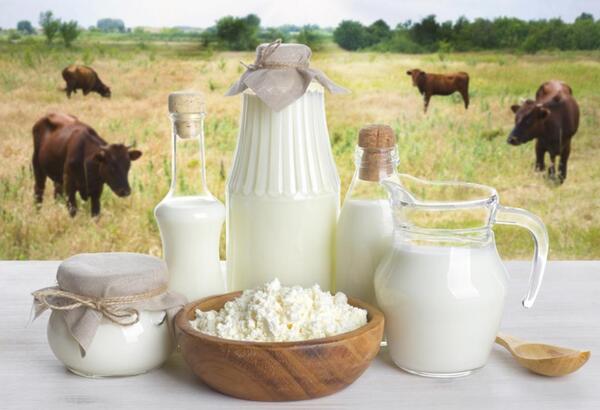
In brief. 1 tonne of milk yields approximately: 950 L of kefir, 200 kg of tvorog (quark), 800 L of ryazhenka, 850 L of prostokvasha, 980 L of yoghurt, 100 L of sour cream, 100 L of cream, 40 kg of butter, 80 kg of hard or 120 kg of soft cheese, and about 800 L of whey. The exact yield depends on the fat content of the raw milk and of the finished product.
Dairy products are made from cow's milk, which must comply with GOST R 52054-2003 (Russian standard). Below are the quantities of various products per 1 tonne of raw milk. Some products are made from cream or from a standardized milk mix of the required fat content, so the milk has to go through an additional processing step.
Dairy product yield per 1 tonne of milk
| Product | Quantity |
|---|---|
| Kefir | 950 L |
| Tvorog (quark) | 200 kg |
| Ryazhenka (baked fermented milk) | 800 L |
| Prostokvasha (soured milk) | 850 L |
| Yoghurt | 980 L |
| Sour cream | 100 L |
| Cream | 100 L |
| Butter | 40 kg |
| Hard cheese | 80 kg |
| Soft cheese | 120 kg |
| Whey | 800 L |
*Please note that the product quantities are approximate and depend on the fat content of the raw milk and the required fat content of the finished product.
Kefir is a cultured dairy product made from whole milk fermented with kefir grains. The milk is first pasteurized, and the starter is added at 22–35 °C. After mixing, the mix is left for 8–12 hours to ferment. The finished product is cooled to 14 ± 2 °C while being stirred. The drink is then fed to a filling machine and packed into transport containers.
Tvorog (quark) is also made from whole, pre-pasteurized milk by fermentation followed by pressing. To make tvorog you need a curd vat that maintains the 26–32 °C required for fermentation. After the starter culture is added, the mix is left for 6–10 hours. Once the coagulum has formed, it is cut into small pieces and left for another hour. The mass is then placed in special bags in a press trolley to remove the whey. Pressing takes no more than 4 hours. The finished product is then cooled and sent for packing.
Ryazhenka (baked fermented milk) is a cultured milk drink made by fermenting baked milk. To make ryazhenka (varenets) you need a long-time pasteurization vat. In it, the prepared standardized milk is held at 90–92 °C for at least 3–5 hours, acquiring a light cream colour and a characteristic baked flavour. The mix is then cooled, the starter culture is added and it is left to rest for 4–6 hours. At the end of fermentation the product is stirred, cooled and sent for packing.
Prostokvasha is a cultured dairy product whose production process is very similar to that of kefir. The main difference is that prostokvasha is fermented naturally at temperatures above +26 °C, without added starter cultures. Fermentation takes 10 to 12 hours.
Yoghurt is also made by fermenting milk, but with a special starter — a culture of the lactic acid bacterium Streptococcus thermophilus. The main equipment needed for yoghurt production is a long-time pasteurization vat, which heats the raw milk to the required temperature and holds it for 6–8 hours, stirring as needed. At the end of fermentation, flavourings and colourings are added to suit the product type. Yoghurt is packed in the same way as other liquid products, using filling machines.
Cream is obtained from whole milk by separation. Pasteurized cream is produced in pasteurization units at 86 °C with a holding time of 2–10 minutes. The product is then cooled to filling temperature and fed by a pump to the packing machine.
Sour cream is a thick, paste-like cultured dairy product made from cream and starter culture. The cream obtained by separating milk is pasteurized, cooled to fermentation temperature, and the starter is added. Fermentation takes 6 to 12 hours. When fermentation is complete, the sour cream is stirred and sent to an automatic plastic cup filling machine.
Butter is also made from cream, by churning. The separated and pasteurized cream is ripened for a certain time and fed into a batch butter churn. Churning and working the butter grains in the churn takes 60–90 minutes; the finished product is then packed in the required packaging and moved to a cold store.
Hard cheese is a fermented dairy product with a firm texture, for example Parmesan, Swiss, Dutch, Rossiyskiy (Russian), Cheddar and others. Soft cheese is a fermented dairy product with a soft, creamy texture, for example Roquefort, Camembert and others. Each type of cheese is made using its own process, but there are key stages common to all of them. In cheese vats, milk is coagulated using a bacterial starter culture and rennet. The resulting curd is cut, stirred and moulded by self-pressing or with special presses.
Whey is obtained in the production of tvorog and cheese and is essentially a by-product of processing. However, it can be used to make whey-based drinks, to standardize milk and cream, and as a livestock feed additive.
The Milberg plant offers a wide range of equipment for dairy production. In line with food safety and hygiene standards, all equipment manufactured at the plant is made of high-quality stainless steel approved for use in the food industry.
To process 1–3 tonnes of milk a day you need a dairy workshop: milk reception and metering, cooling, separation, pasteurization, fermentation and filling. A typical layout for such a workshop is shown on the page "Dairy workshop for 1,000–3,000 L per day", and all equipment sets by product and volume are in the section "Equipment sets, modular workshops and mini plants".
If you need equipment for milk processing, submit a request on the website or contact our specialists by phone.
Milberg equipment mentioned in this article
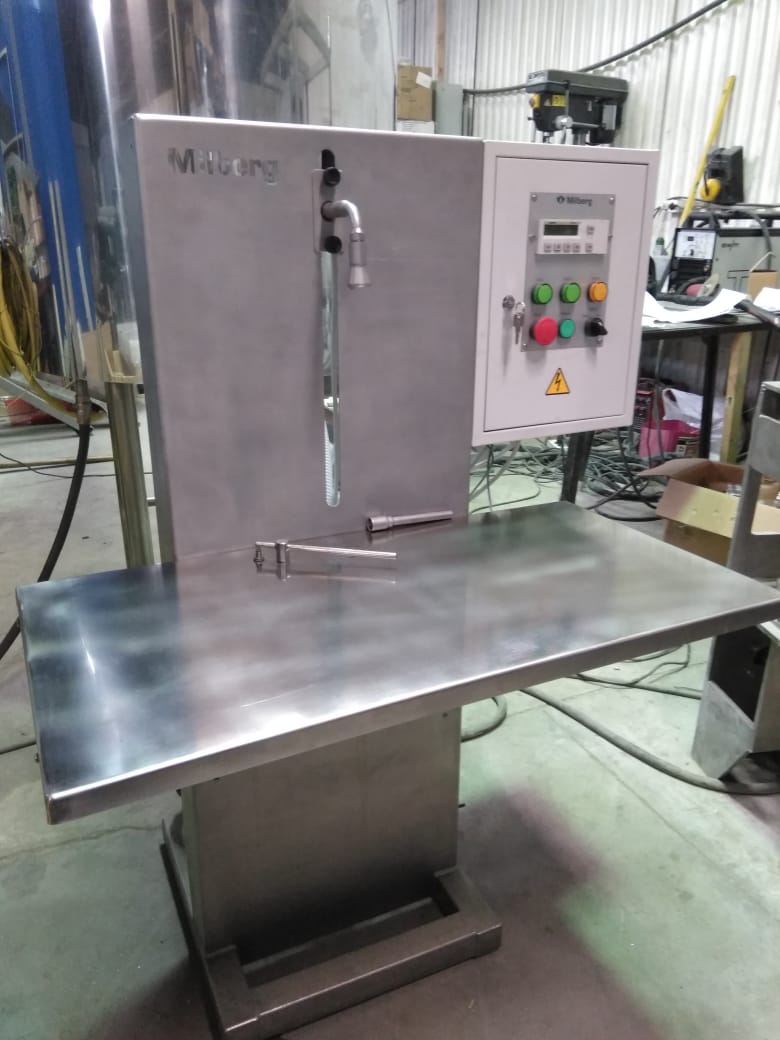 UD-2 dosing and filling unit for bottles and cupsFilling milk and cultured dairy products into bottles and cups
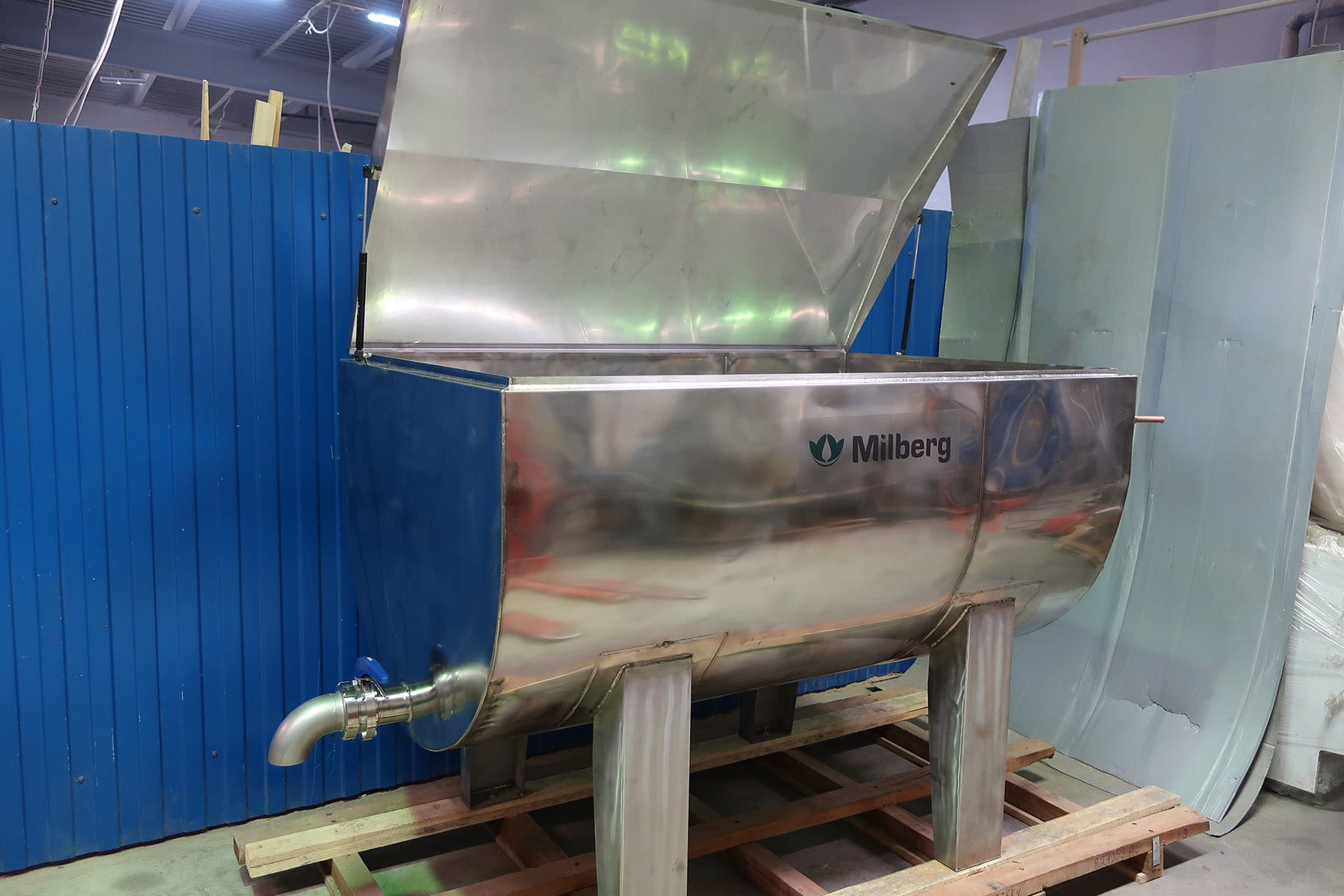 VT curd vatTraditional tvorog (quark) production
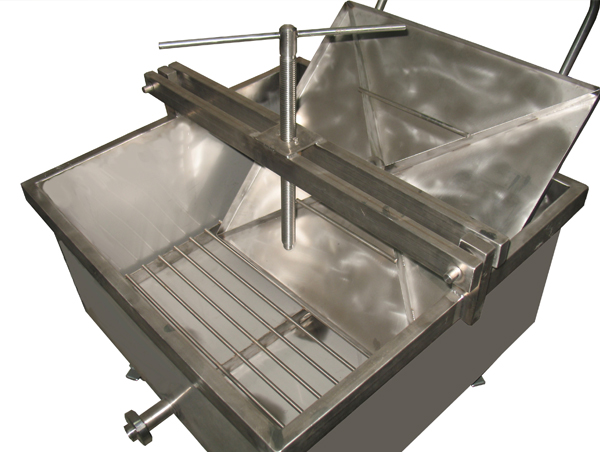 Press trolley for cheese and tvorogPressing of soft cheeses and tvorog, whey drainage
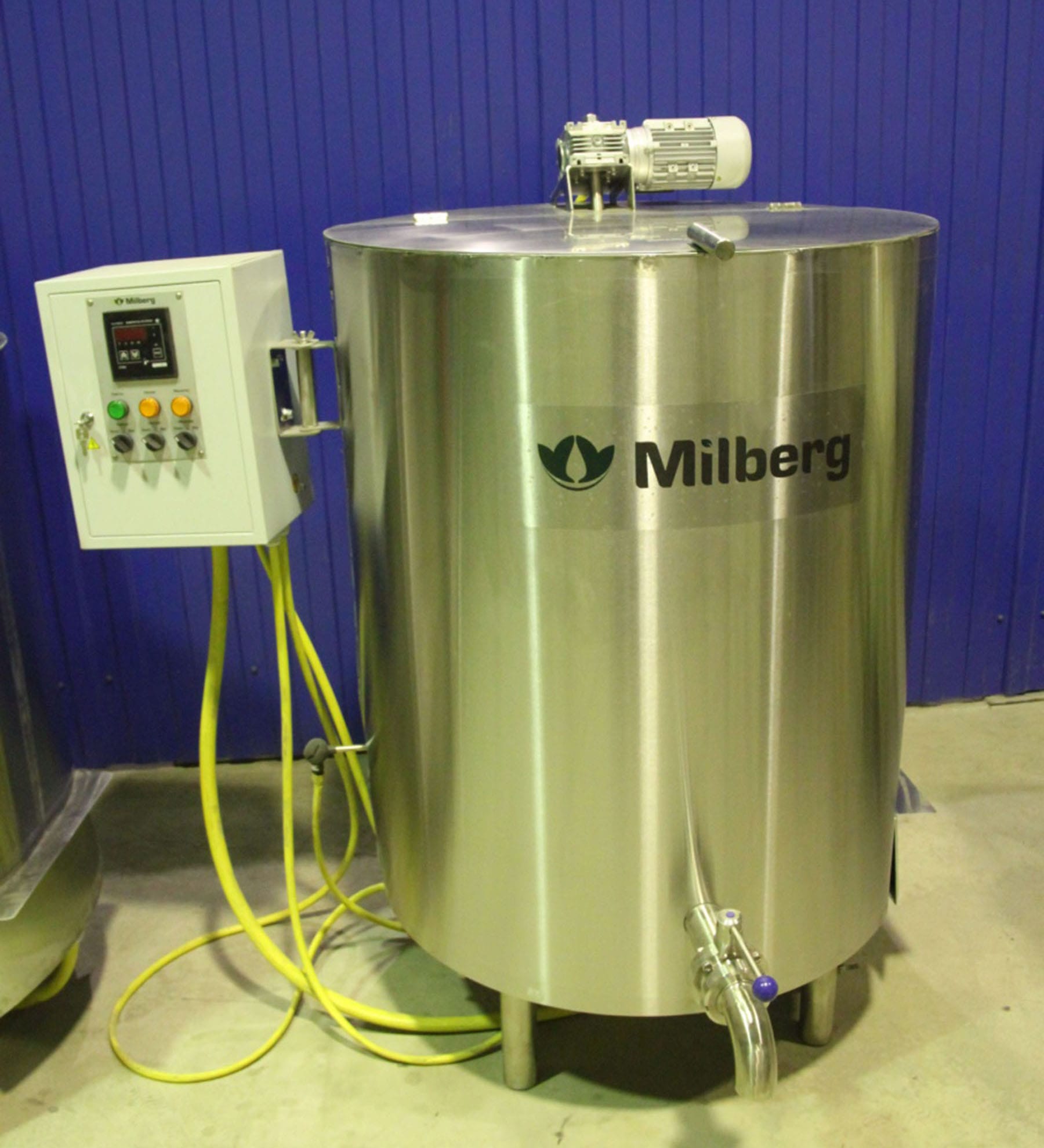 VDP batch pasteurizerMilk pasteurization and cultured dairy production Cream separatorSeparating milk into cream and skim milk, fat standardization
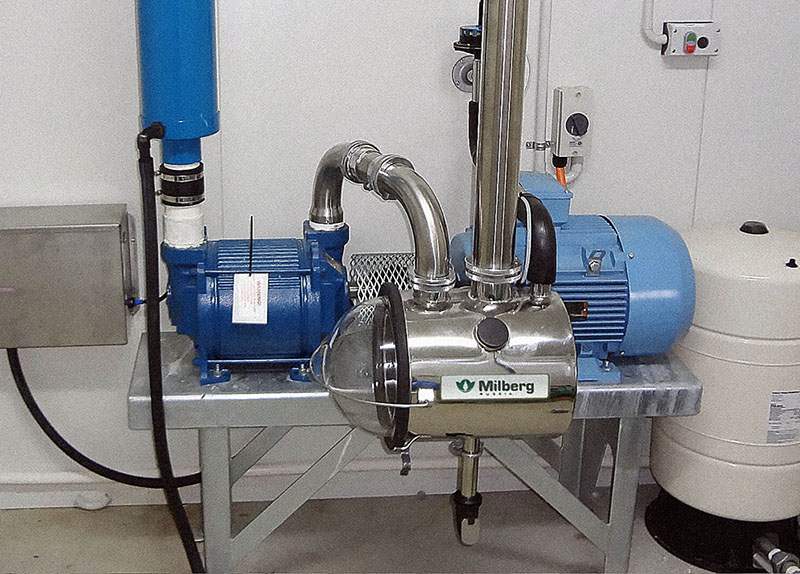 Milk pumps for the dairy industry — G2-OPA, G2-OPB, G2-OPD, ONTs, ONTs1, ONTsS, NTsS-12/10, 2G2-OPDTransfer of milk, cream, whey and cultured dairy products
Catalogue sections: Packaging equipment, Curd (tvorog) and cultured dairy equipment, Milk processing equipment