


Milk reception at the plant: how a milk reception and metering station works
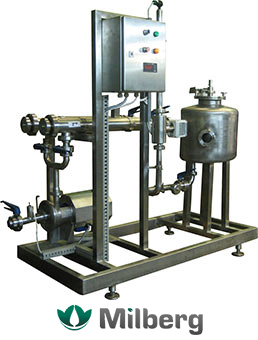
In short. Reception is the first stage of any milk processing: milk is checked, measured, cleaned and cooled before it goes to the pasteurizer or cheese vat. At a plant this is done by a milk reception and metering station — a pump, flow meter, filter and heat exchanger in a single unit. Milberg stations work inline with a capacity of 500 to 20,000 L/h and measure volume to an accuracy of ±0.5%. For small farms there is a mobile version — a cart with a pump, filter and meter.
What happens to milk at reception
Milk arrives at the plant in a milk tanker or comes from the farm through a pipeline. Before it goes into processing, four tasks have to be done:
- check the quality — the laboratory takes a sample and checks the fat content, acidity, density, temperature and cleanliness of the milk;
- measure the quantity — how much milk has been received from the supplier, to pay for it and keep raw milk records;
- clean it — remove mechanical impurities with a filter;
- cool it — so that the milk keeps its quality until processing.
Quality checking is the laboratory's job. The other three operations are handled by the reception and metering station: milk passes through it once and goes to the tank already measured, cleaned and cooled.
How a milk reception and metering station works
A milk reception and metering station combines metering, filtration and cooling of milk in a single inline unit. The standard set includes:
- a pump — draws milk from the tanker or tank and feeds it further down the line;
- a filter — retains mechanical impurities;
- a flow meter — measures the volume of milk passing through the station;
- a heat exchanger — cools the milk before it goes to storage or processing.
Product-contact parts are made of AISI 304 stainless steel. The configuration can be changed to suit your specification: Milberg makes both standard station models and custom-built units.
How accurately the station measures milk
The volume measurement error is ±0.5%. The station is designed for milk at +4 to +60 °C and a working pressure of up to 4 bar.
The meter measures volume — litres. If suppliers are paid by the kilogram, volume is converted to mass using the milk density determined by the laboratory at reception.
Which capacity to choose
Capacity is chosen so that a milk tanker is unloaded in a reasonable time and the station does not become a bottleneck ahead of pasteurization. Milberg makes stations for 500, 1,000, 2,500, 5,000, 10,000, 15,000 and 20,000 L/h. The standard models are the SPM-5, SPM-10, SPM-15 and SPM-20:
| Parameter | SPM-5 | SPM-10 | SPM-15 | SPM-20 |
|---|---|---|---|---|
| Capacity, L/h | 5,000 | 10,000 | 15,000 | 20,000 |
| Inlet/outlet DN, mm | 40/32 | 40/32 | 50/50 | 50/50 |
| Power, kW | 1.6 | 2.3 | 5.6 | 5.6 |
| Weight, kg | 120 | 120 | 160 | 160 |
Common to all models: metering accuracy ±0.5%, milk temperature +4…+60 °C, pressure up to 4 bar, 380 V power supply, dimensions 1400 × 1300 × 1500 mm.
A frequent question in enquiries is: "0.5–1 tonne — is that milk or cheese?" The station is sized by milk: how many litres you receive per shift and how quickly a tanker needs to be unloaded.
What to choose for a farm or a small cheese dairy
Farms receiving 500–1,000 L of milk per day usually do not need a stationary inline station. For these volumes there is a mobile option — a cart with a pump of up to 8 m³/h, a filter and a meter. It is mobile: with it, milk is received with metering and filtration and then cooled in a milk cooling tank.
When a customer asks about turnkey reception — filters, metering and a tank — we immediately ask what volume of milk cooling tank is needed: Milberg cooling tanks range from 100 to 10,000 L.
What comes after the reception station
From there, milk follows the process for the specific product: storage in a cooling tank, separation and standardization, pasteurization. The more milk a plant receives, the more important it is that pasteurization keeps pace with reception. A batch vat suits small batches; continuous flow requires a tubular pasteurizer — see the article "Milk pasteurizer: VDP vat or tubular" for details. How reception fits into a tvorog line is covered in the article "Tvorog production: technology and equipment".
Where this equipment is already in operation
In a line, the reception station is usually followed by pasteurization, and customers have come to us more than once for exactly this combination. In 2019 we supplied a private producer in Kazakhstan with a TT-4000 continuous pasteurizer rated at 4,000 L/h: the volume of milk received had grown, and vat pasteurization could no longer keep up with reception. In 2024 another company in Kazakhstan received a PT-2000 pasteurizer together with a milk pump — milk is now pasteurized inline immediately after reception. All projects are in the ["Case studies"](/projects/ section.
Tell us how much milk you receive per shift, how it arrives (milk tanker, pipeline from the farm) and what you will produce, and we will select a reception station or cart and prepare a quotation within one working day. All equipment for dairy production is in the "Milk processing equipment" section.
Milberg equipment mentioned in this article
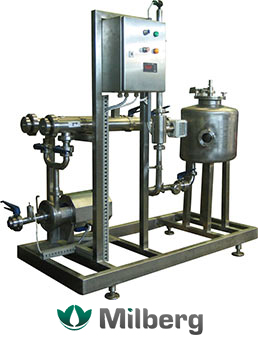 SPM milk reception and metering stationIn-line milk reception and metering
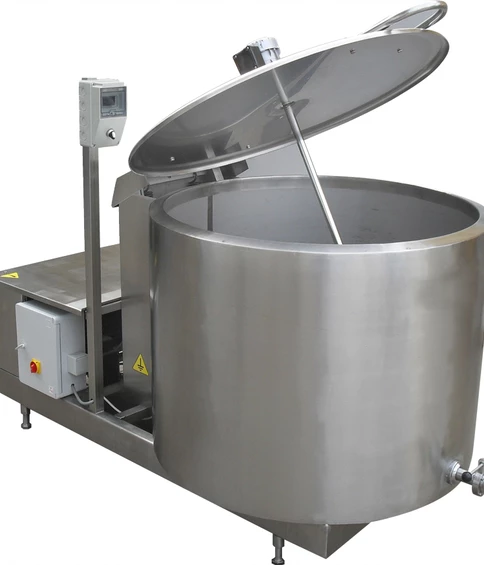 Milk cooler (milk cooling tank)Rapid cooling of milk after milking and pasteurization
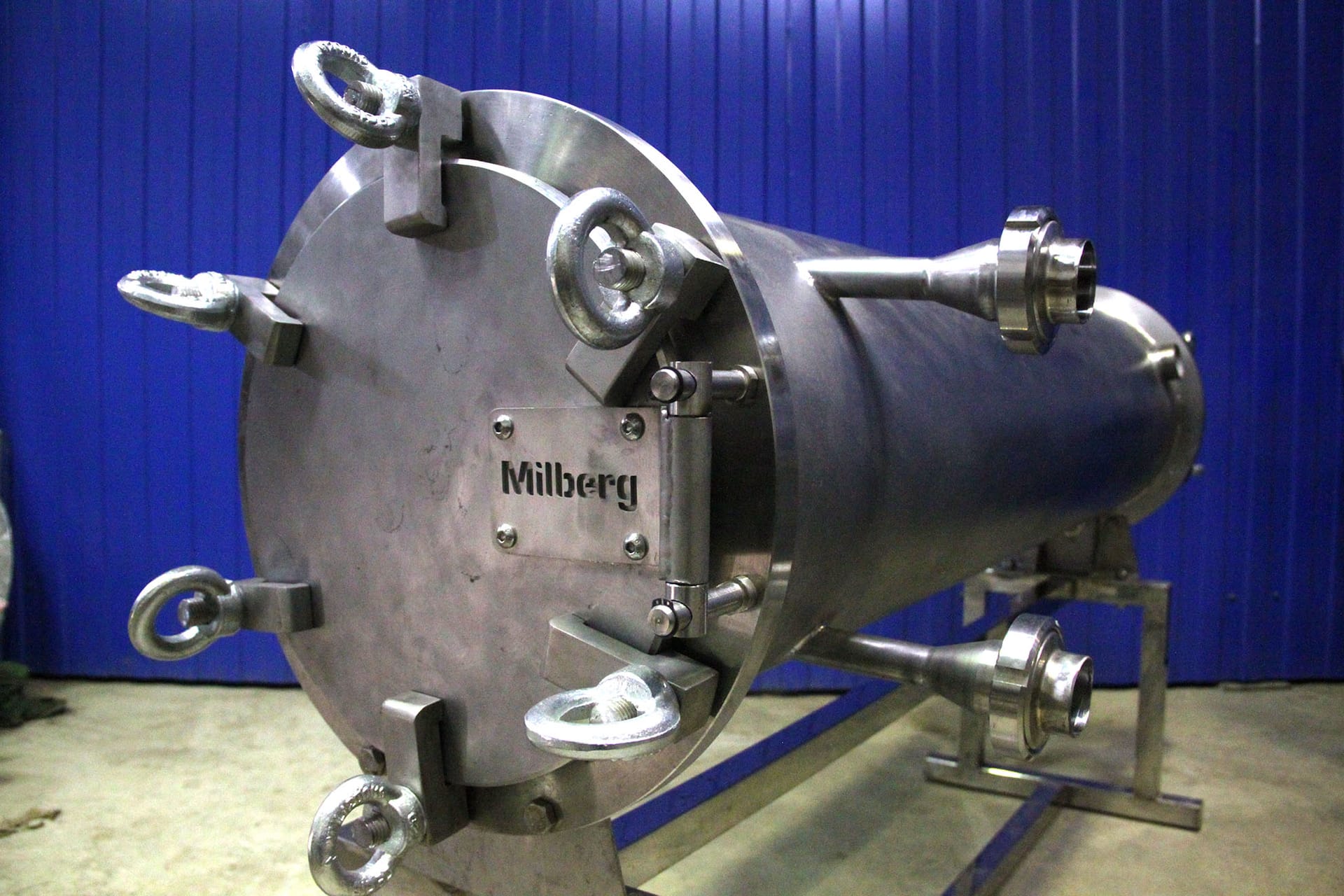 Continuous tubular pasteurizerIn-line pasteurization from 500 L/h
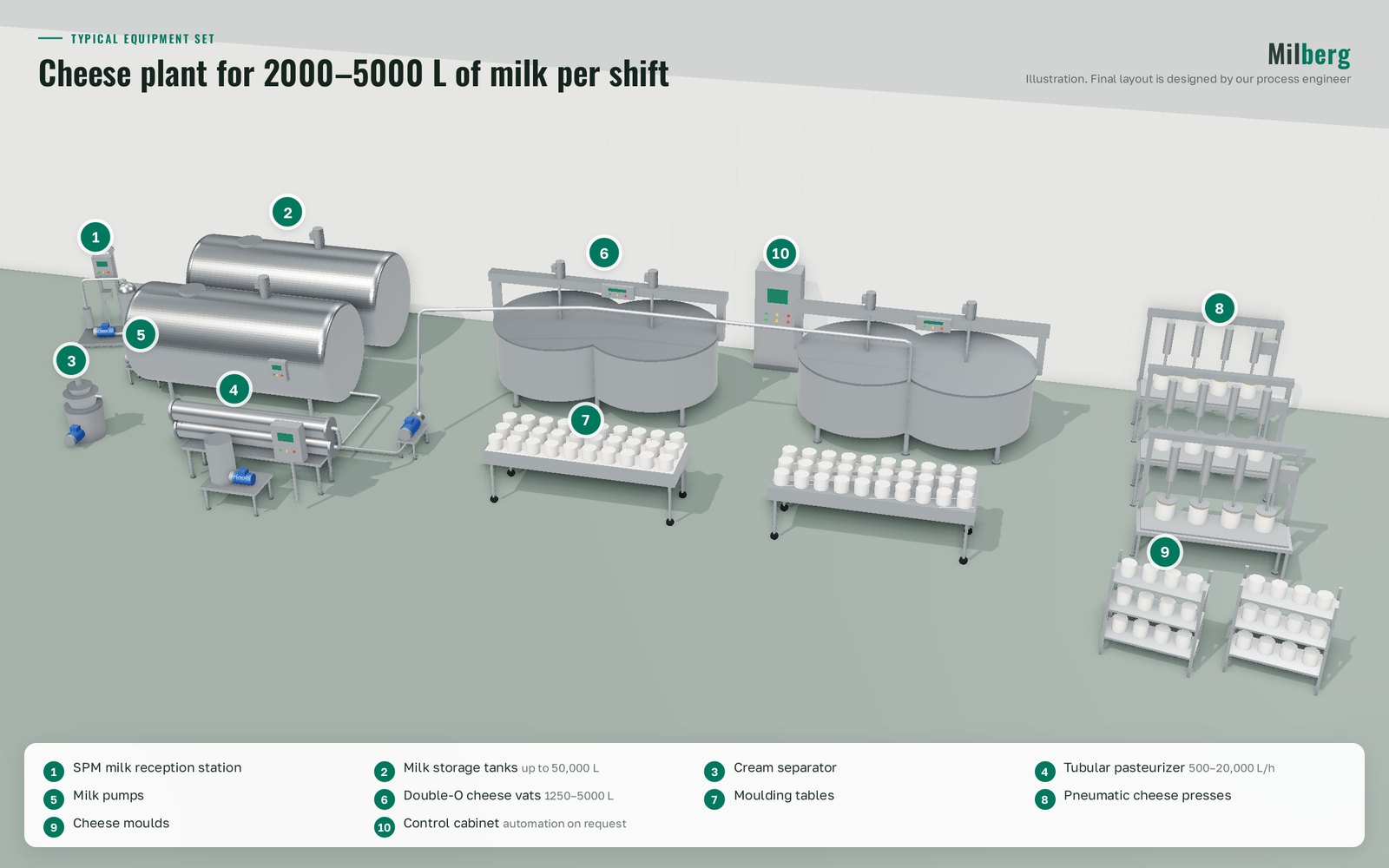 Cheese plant for 2,000–5,000 L of milk: equipmentIndustrial cheese vats, continuous pasteurization, milk reception, automation
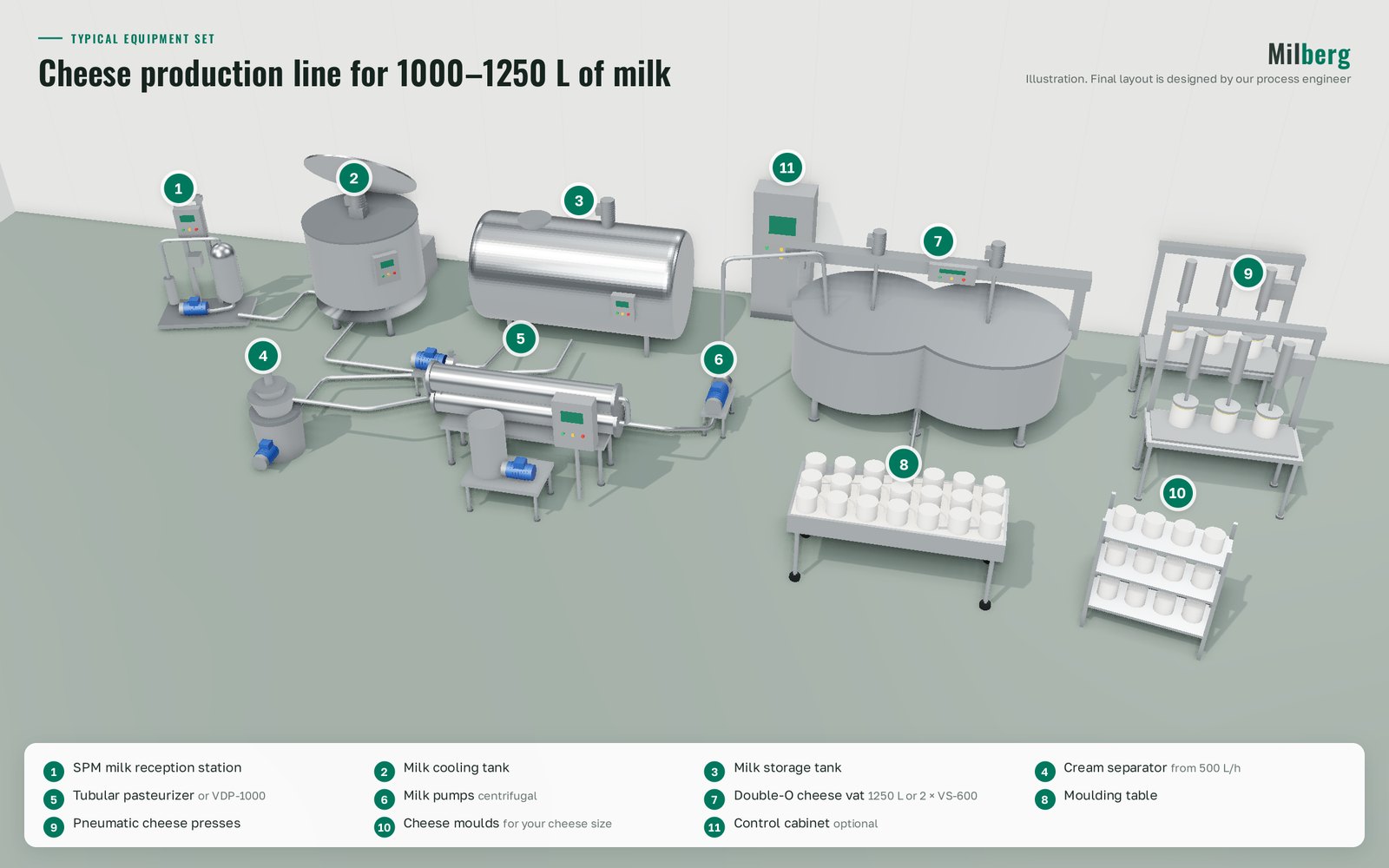 Cheese production line for 1,000–1,250 L of milkContinuous line — reception, pasteurization, cheese vats, pressing
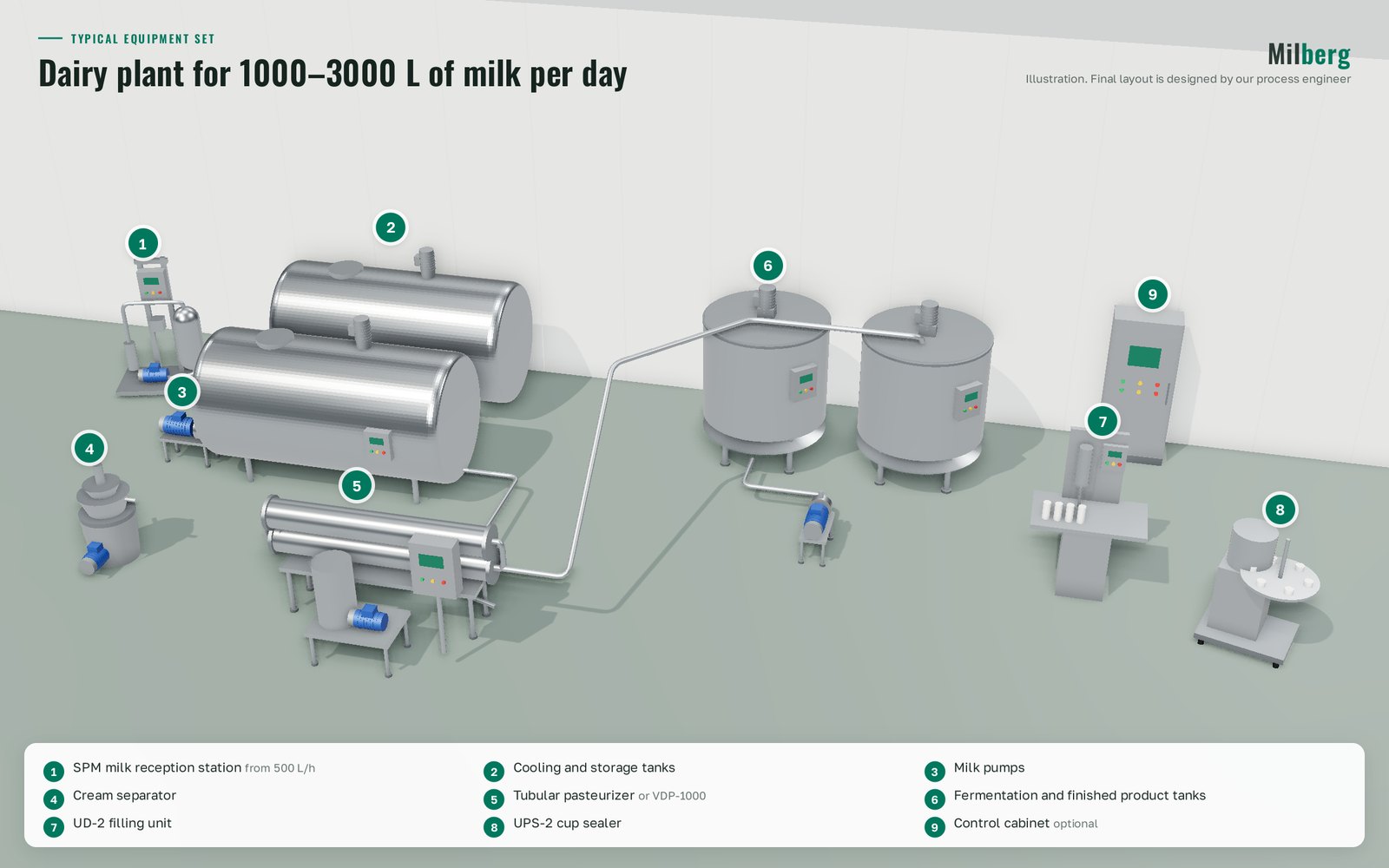 Dairy plant for 1,000–3,000 L per day: milk processing lineReception, separation, in-line pasteurization, tanks, filling
Catalogue sections: Milk processing equipment, Equipment sets, modular dairies and mini plants