


Paddle or drum butter churn: which to choose and how it affects the butter
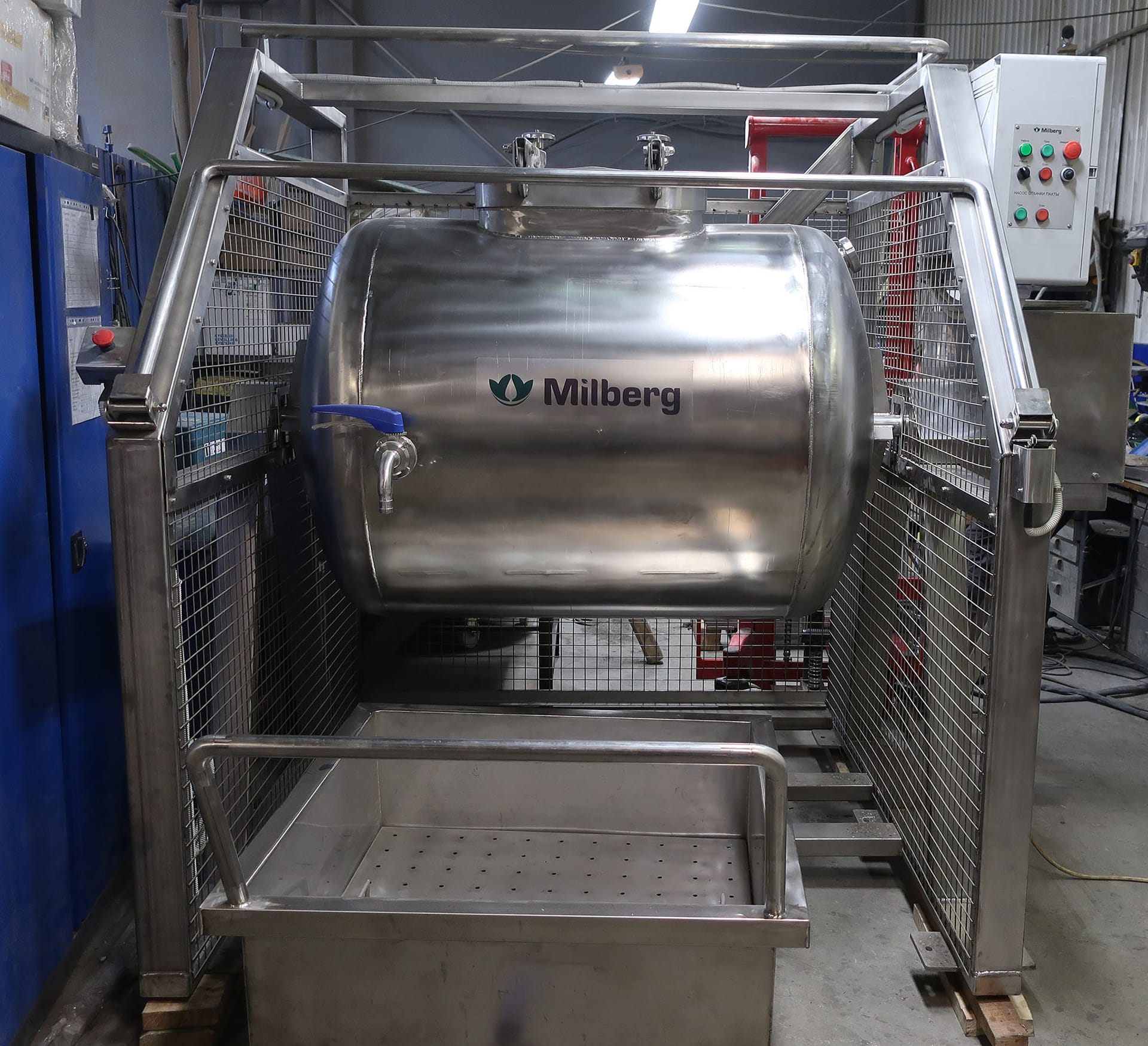
In brief. The type of churn decides what butter you will sell: a drum churn produces dense butter with up to 82% fat, while in paddle churns, according to our customers' experience, it only reaches 60–72%. That is why paddle churns are bought for small batches, and a plant that makes butter every day needs a drum churn.
How do paddle and drum butter churns differ?
Both machines are batch butter churns. Cream is loaded in a batch, churned into butter grains, the buttermilk is drained, the butter is unloaded and the next batch goes in. The difference lies in what actually moves inside.
In a paddle churn (our ML model) the vessel stays still and the cream is mixed by rotating paddles. It is a compact, inexpensive machine for small volumes.
In a drum churn (MI model) the whole drum rotates. Paddles on its walls pick up the cream and lift it, and the cream falls and breaks under its own weight — several times per revolution. The shape and arrangement of the paddles in the MI are patented: repeated churning shortens the cycle and improves butter quality.
"Drum-type churns produce better-quality butter (that is, churning goes better) thanks to much stronger and repeated impacts on the cream, which cannot be achieved in paddle-type churns." — Alexey Troshin, Director of the Milberg plant
Why is butter from a drum churn denser and higher in fat?
Butter forms when the fat globules in cream stick together into grains under impact, and the water and buttermilk separate out. The stronger and more frequent the impacts, the more completely the buttermilk is separated and the denser the butter mass.
In Milberg drum churns, customers make butter with up to 82% fat and a dense texture — such butter is considered more expensive and of higher quality. Churning takes 40 to 120 minutes: the time depends on the temperature and composition of the cream and on the drum's spray system.
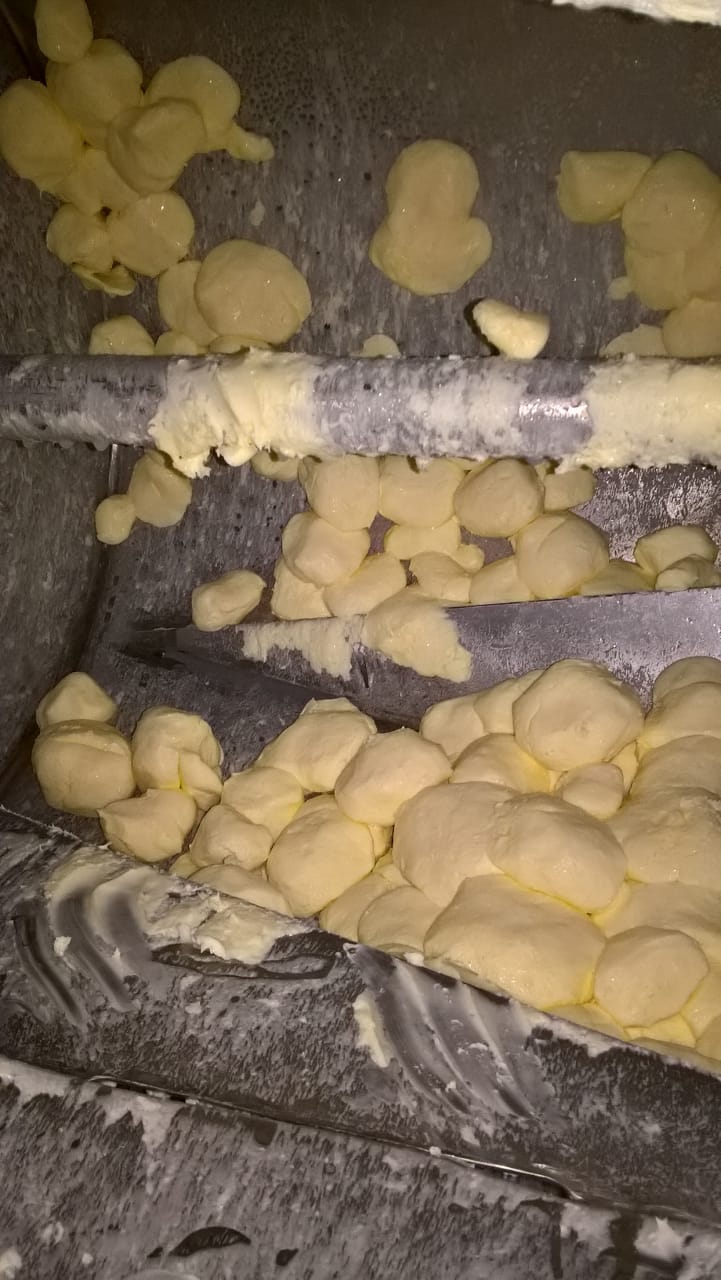
Paddle vs drum butter churn: comparison
| Parameter | Paddle (ML) | Drum (MI) |
|---|---|---|
| What rotates | Paddles in a stationary vessel | The whole drum with paddles |
| Butter fat content | Customers' experience — up to 60–72% (paddle churns from various manufacturers) | Up to 82%, dense texture |
| Volumes | Small: 30–100 L, 220 V mains | Up to 3,000 L; in our deliveries — from 50 to 1,200 L |
| Suited to | Small batches | Continuous output: plants, cooperatives, dairy plants |
A paddle churn is enough if butter is churned occasionally and in small amounts. If butter is a product your plant makes and sells every day, choose a drum churn: the density and fat content of the butter decide what price it will fetch.
What churn size does a plant need?
The main mistake is buying a churn "by litres of cream". The drum is filled with cream to only 25–40% of its geometric volume, half at most. Otherwise the cream has no room to fall and break, and churning is less effective.
How to calculate:
- a 100 L churn — 25–40 L of cream per batch;
- 400 L — 100–160 L;
- 1,000 L — 250–400 L;
- 1,200 L — 300–480 L.
If you need to churn 200 L of cream per batch, you need a 500–800 L churn, not a 200 L one. Then work out how many batches the plant can run per shift: to the 40–120 minutes of churning, add buttermilk draining, grain washing and unloading.
What else to check before buying a drum butter churn?
- Unloading. After churning, the operator uses push buttons in jog mode to turn the drum with the hatch facing down, and the butter is unloaded into a trolley. On 1,000 L churns the hatch is rectangular, which makes unloading easier.
- Grain control. There is a sight glass on the side wall of the drum; a second one on the hatch cover is available on request.
- Safety. All Milberg churns come with a guard and an electrical drive interlock.
- Options. Drum speed control, buttermilk pump, additional guard.
- After the churn. To avoid moving butter by hand, it can be fed to packing by a screw — with the USHPR-01 screw butter feeder.
- Lead times and documents. Popular sizes are often in stock; others are made from 15 working days. EAC declaration of conformity (EAEU technical regulations), equipment passport, 12-month warranty. A churning recipe is provided with the purchase.
Where Milberg drum butter churns are already in operation
- Dairy plant, Krasnoyarsk Krai — MI-400 since 2018: the plant uses it to produce speciality butter alongside its main line.
- Manufacturing company, Kazakhstan — bought an MI-400 in 2023 and, as volumes grew, ordered an MI-1200 in 2024.
- Agricultural cooperative, Irkutsk Region — MI-1000 paired with the USHPR-01 screw feeder; the cooperative has worked with the plant since 2020 under two contracts.
- Family farm, Tyumen Region — MI-700 in 2025: the farm used to sell its surplus cream and now makes its own butter.
- Uzbekistan — MI-500 (2019) and MI-320 with a screw feeder (2020).
All projects are in the Case studies section.
Tell us how much cream you have per day and what butter you plan to produce — we will select the type and size of butter churn and send a quotation within one working day. Price — from €1,900. Other butter equipment is in the Butter production equipment section.
Milberg equipment mentioned in this article
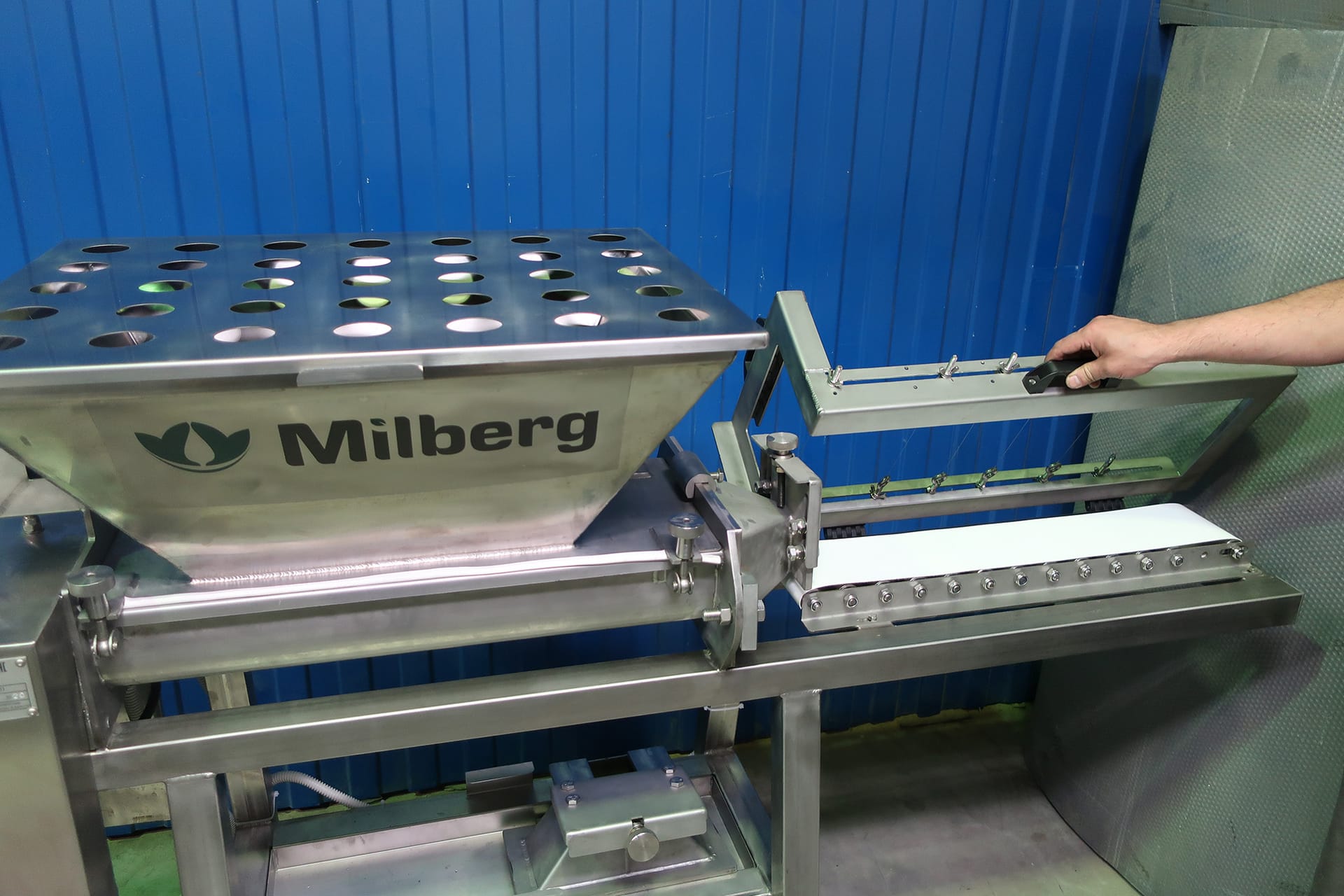 Semi-automatic butter extruder for portioningSemi-automatic portioning of butter, margarine and spread
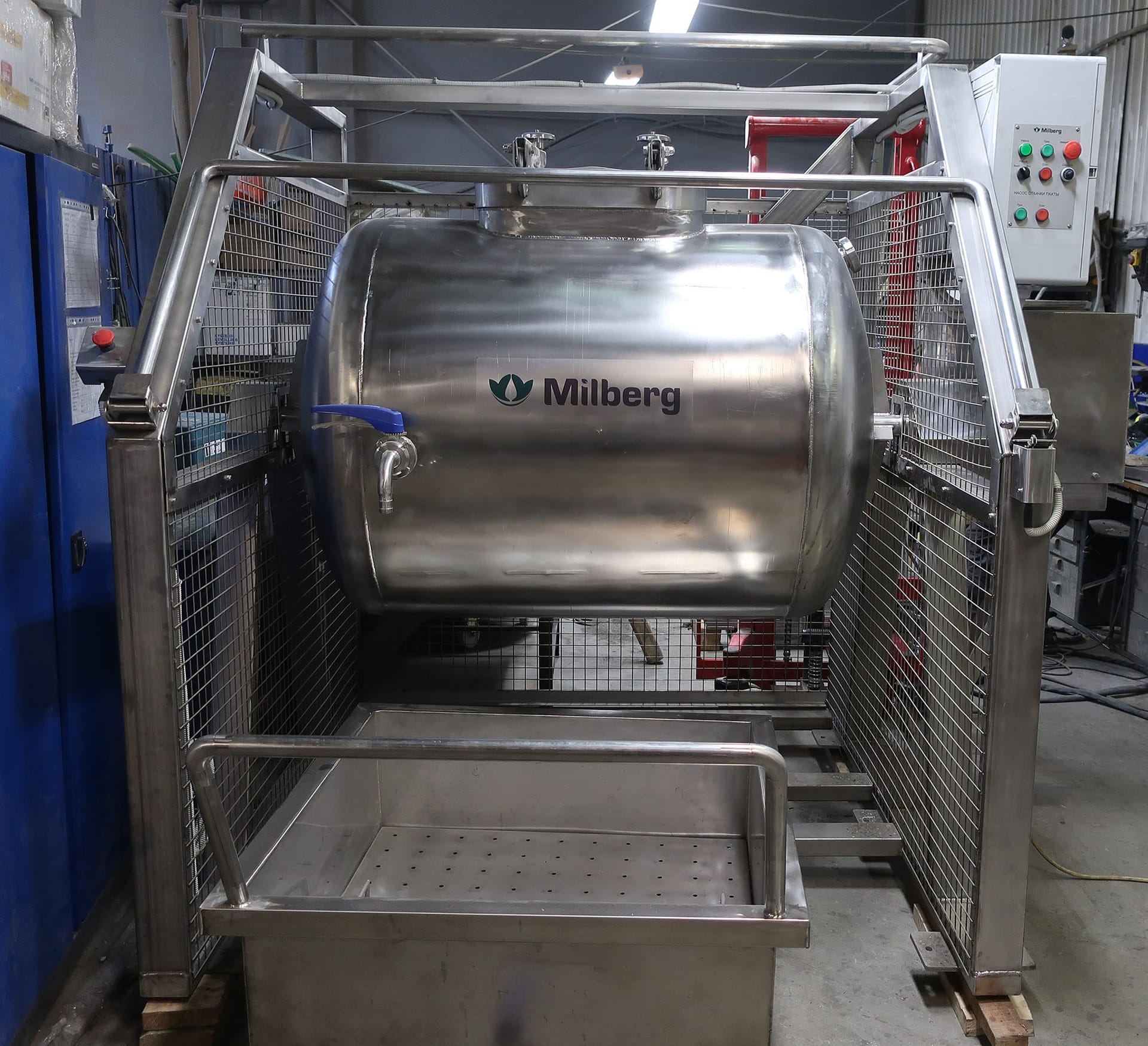 Batch butter churn (industrial butter churn)Butter production by the traditional churning method
Catalogue sections: Packaging equipment, Butter making equipment, Milk processing equipment