


Sour cream and tvorog production technology
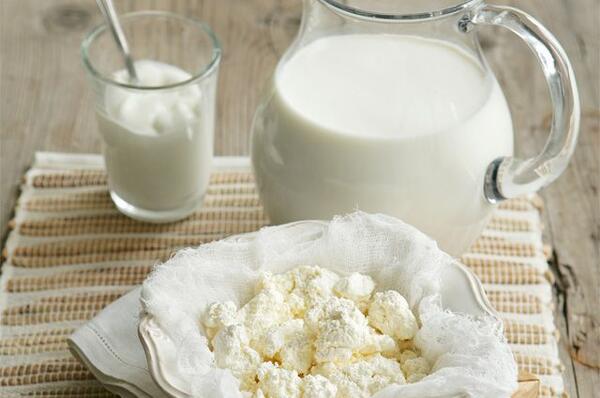
Sour cream is a thick white cultured dairy product made from cream and starter culture, with a fat content of 10 to 30%. Using only pasteurized cream ensures high sanitary and hygienic quality and good keeping properties.
Pasteurization of the cream is needed to destroy microorganisms and inactivate the lipase enzyme.
Homogenization of the cream gives it a uniform, thick texture.
Inoculation and fermentation of the cream. After pasteurization and homogenization, the cream is cooled to the inoculation temperature — 18–22 °C in summer and 22–23 °C in winter — and sent to the fermentation tanks. Sour cream is made with multi-strain starter cultures prepared from pure cultures of homofermentative and heterofermentative mesophilic lactic streptococci: Str. lactis, Str. cremoris, Str. diacetilactis, Str. subsp. or Str. acetoinicus; for acidophilus sour cream, Lactobacillus acidophilus and an aroma-forming lactic streptococcus are used.
Cooling. Cooling is carried out during the logarithmic phase, when the lactic microflora of the starter culture multiplies at its maximum rate.
Filling and maturing. Sour cream should preferably be sent to filling by gravity, using mechanisms that have minimal impact on its structure, or filled before fermentation is complete. For a firmer consistency it is sent to cold rooms at 2–8 °C, where it cools and matures.
The taste and smell of sour cream are delicate and clean-sour, with no foreign, pronounced flavours or odours uncharacteristic of fresh sour cream; a slight feed taste, a taste of the packaging (wood) and slight bitterness are permitted.
The consistency of sour cream is moderately thick and uniform, without grains of fat or protein (curd).
Sour cream has a glossy appearance, and its colour ranges from white to slightly yellowish.
Tvorog (quark) is a high-protein cultured dairy product made using starter microorganisms — lactococci, or a mixture of lactococci and thermophilic lactic streptococci.
Tvorog is produced by two methods:
- Acid (acid coagulation of proteins) — tvorog is obtained by lactic acid fermentation;
- Acid-rennet (acid-rennet coagulation of proteins) — in addition to the starter culture, calcium chloride and rennet are added.
Production steps:
Heat the vessel with the milk under a lid to 76–80 °C and hold for 10–20 seconds, stirring periodically.
Cool to 28–34 °C and add a starter culture of pure mesophilic streptococci cultures. In the acid-rennet method, 500 g of anhydrous calcium chloride and 1 g of rennet are added per 1 tonne of milk.
Stir thoroughly for 10–15 minutes.
The fermentation time is controlled by the dose and activity of the starter culture and by the fermentation temperature: 8–12 hours for the acid method (28–32 °C); 8–10 hours for the acid-rennet method (28–32 °C); 6–8 hours for the accelerated method (32–36 °C).
Cut the finished coagulum into cubes and leave it undisturbed for 30–40 minutes so that whey is released and acidity rises.
To separate the whey from the coagulum and bring the moisture content to the standard level, self-pressing is used first, followed by forced pressing.
Tvorog should be uniform throughout, white or slightly yellowish, with a soft, spreadable or crumbly consistency; a non-uniform consistency with some graininess is permitted.
Milberg equipment mentioned in this article
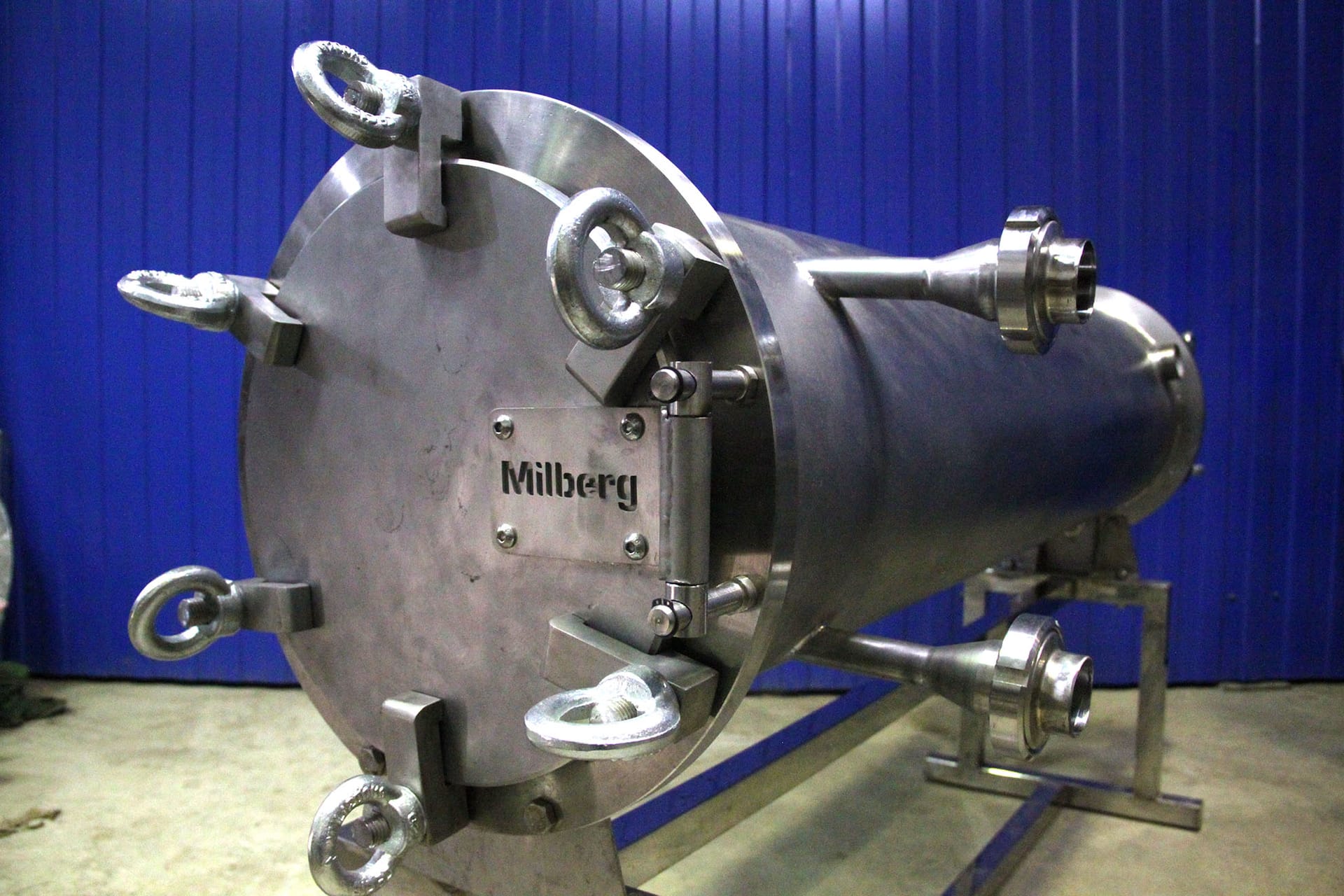 Continuous tubular pasteurizerIn-line pasteurization from 500 L/h
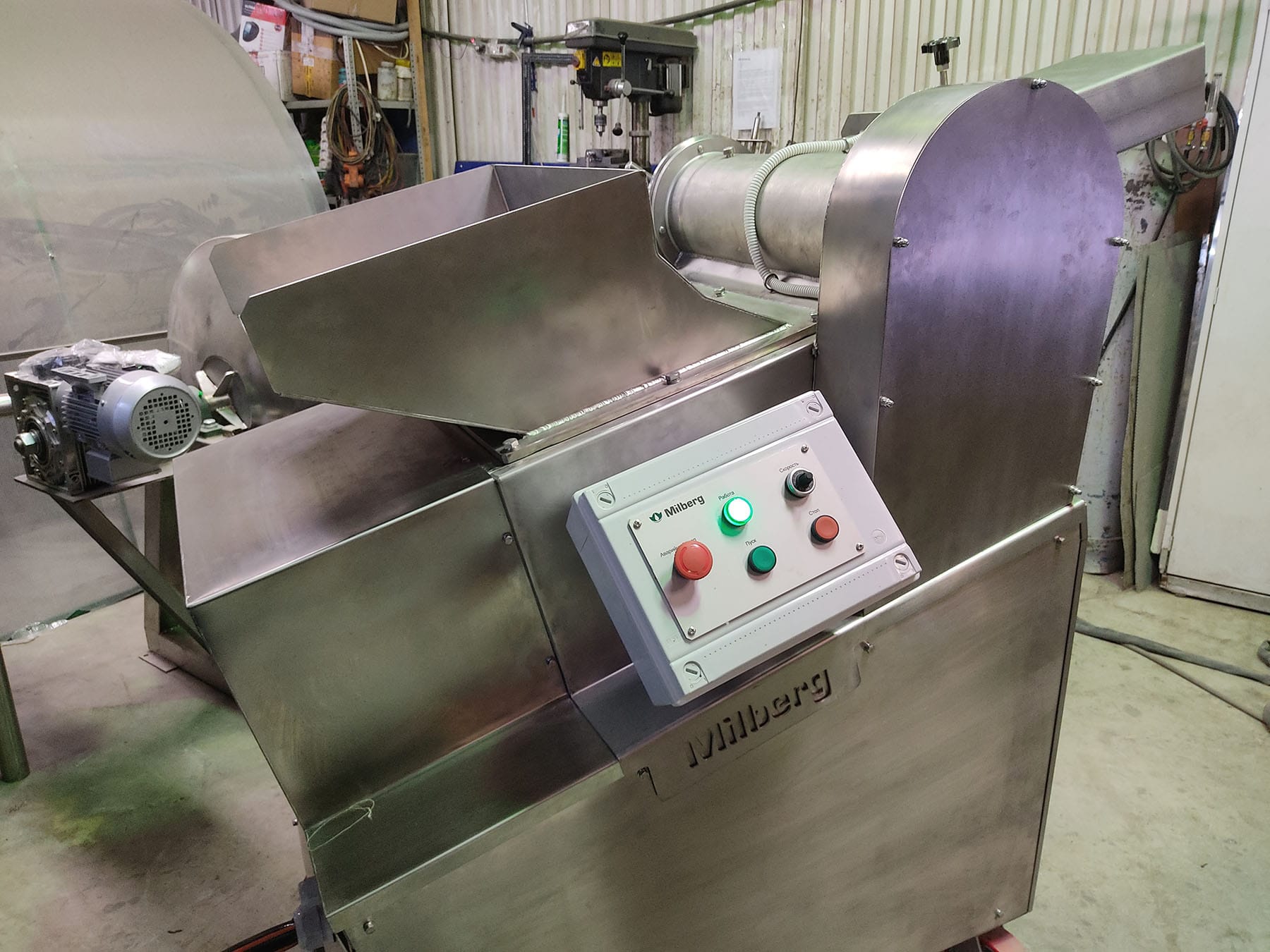 GM butter homogenizer by MilbergHomogenizing butter and margarine before packing
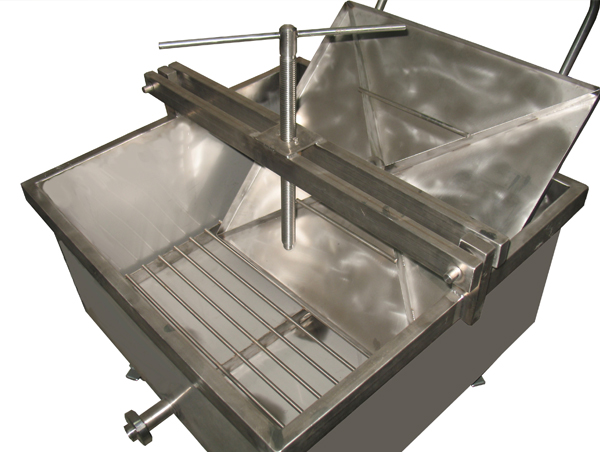 Press trolley for cheese and tvorogPressing of soft cheeses and tvorog, whey drainage
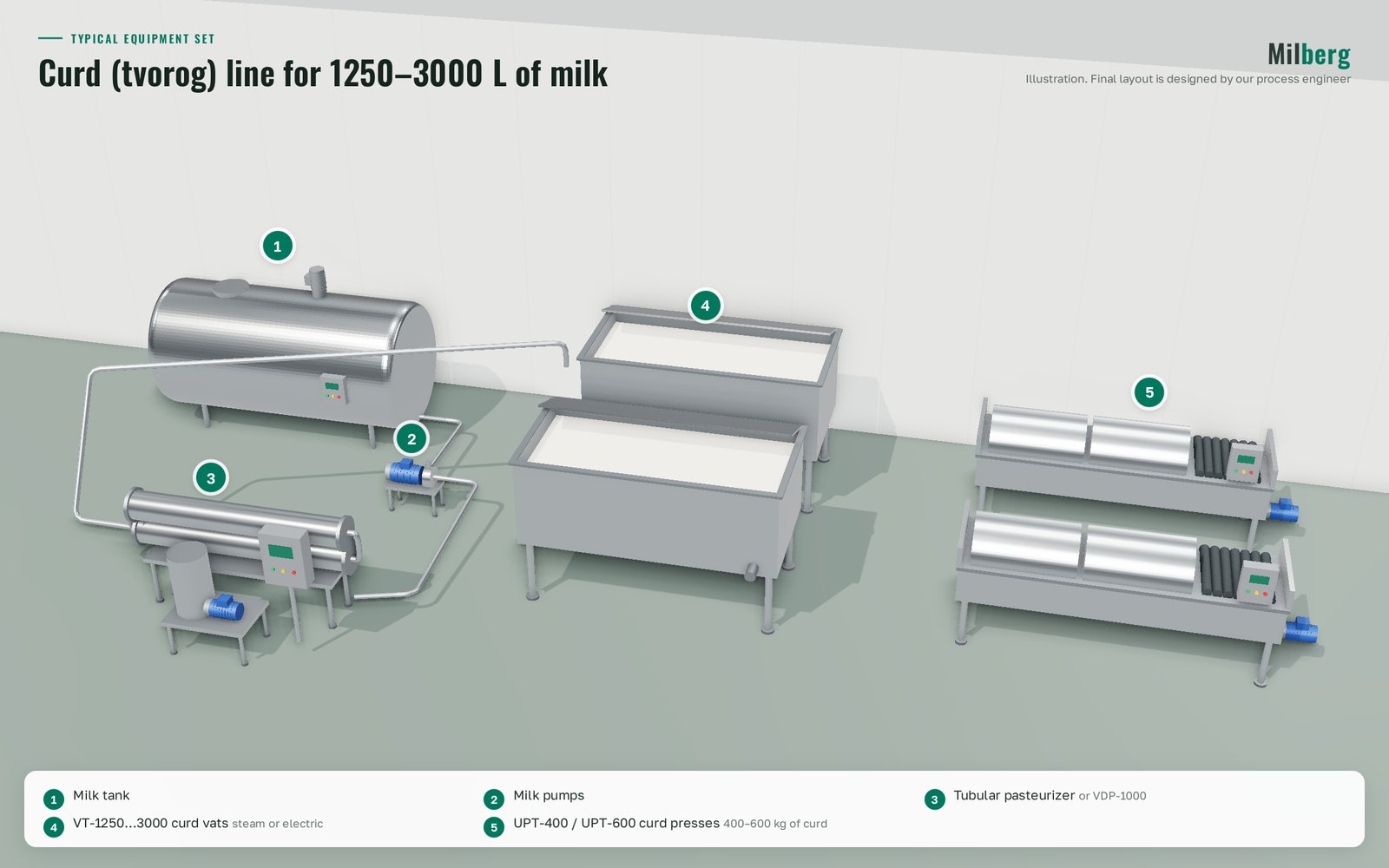 Tvorog (quark) production line for 1,250–3,000 L of milkVT curd vats, UPT-400/600 pressing units, pumps
Catalogue sections: Milk processing equipment, Butter making equipment, Packaging equipment, Curd (tvorog) and cultured dairy equipment, Equipment sets, modular dairies and mini plants