


Salting cheese
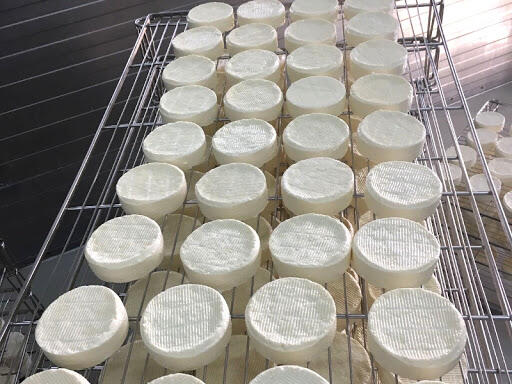
Cheese is a healthy dairy product with a generous variety of flavours. Different types of cheese bring out and complement the flavours of dishes in different ways, adding piquancy, creaminess or sharpness.
Why salt cheese?
The purpose of salting is to give the cheese a particular flavour, to regulate to some extent the microbiological processes during ripening, and to influence the structure, texture and quality of the product.
Factors affecting the salting process:
Salting time.
Pre-salting the cheese in the grain (curd) reduces the salting time by about 1–2 days.
Moisture content of the cheese. Salt diffuses into the cheese more intensively when its moisture content is higher.
Shape of the cheese. For the same weight, block-shaped cheeses take up salt fastest, followed by cylindrical and round ones.
Closedness of the surface layer. The more closed the surface of the cheese, the longer it needs to be salted.
Structure of the cheese body. A dense cheese body increases the salting time.
Brine concentration and temperature. A higher temperature promotes more intensive lactic fermentation and excessive gas formation. The brine temperature is set between 8 and 12 °C; raising it above these values can cause the cheese surface to swell and become slimy, making it difficult to form a normal rind later. In brine of sufficient concentration, cheeses float; if a cheese sinks completely in the brine, the concentration is too low. Brine concentration is determined more accurately with a hydrometer or by titration.
Important! For beginners: the general salting rule for semi-hard pressed cheeses such as Dutch, Rossiysky, Gouda, Kostromskoy, etc. is 2.5 hours per 1 kg of cheese for every 3 cm of cheese thickness.
After salting, the cheese should be left to dry for a day. The recommended drying temperature is 10–15 °C. The resulting dry surface is ready to be coated with polymer materials or to develop a natural rind.
Observing all these conditions and details will give you a healthy and tasty cheese that will look very appetizing on shop counters.
Milberg equipment mentioned in this article
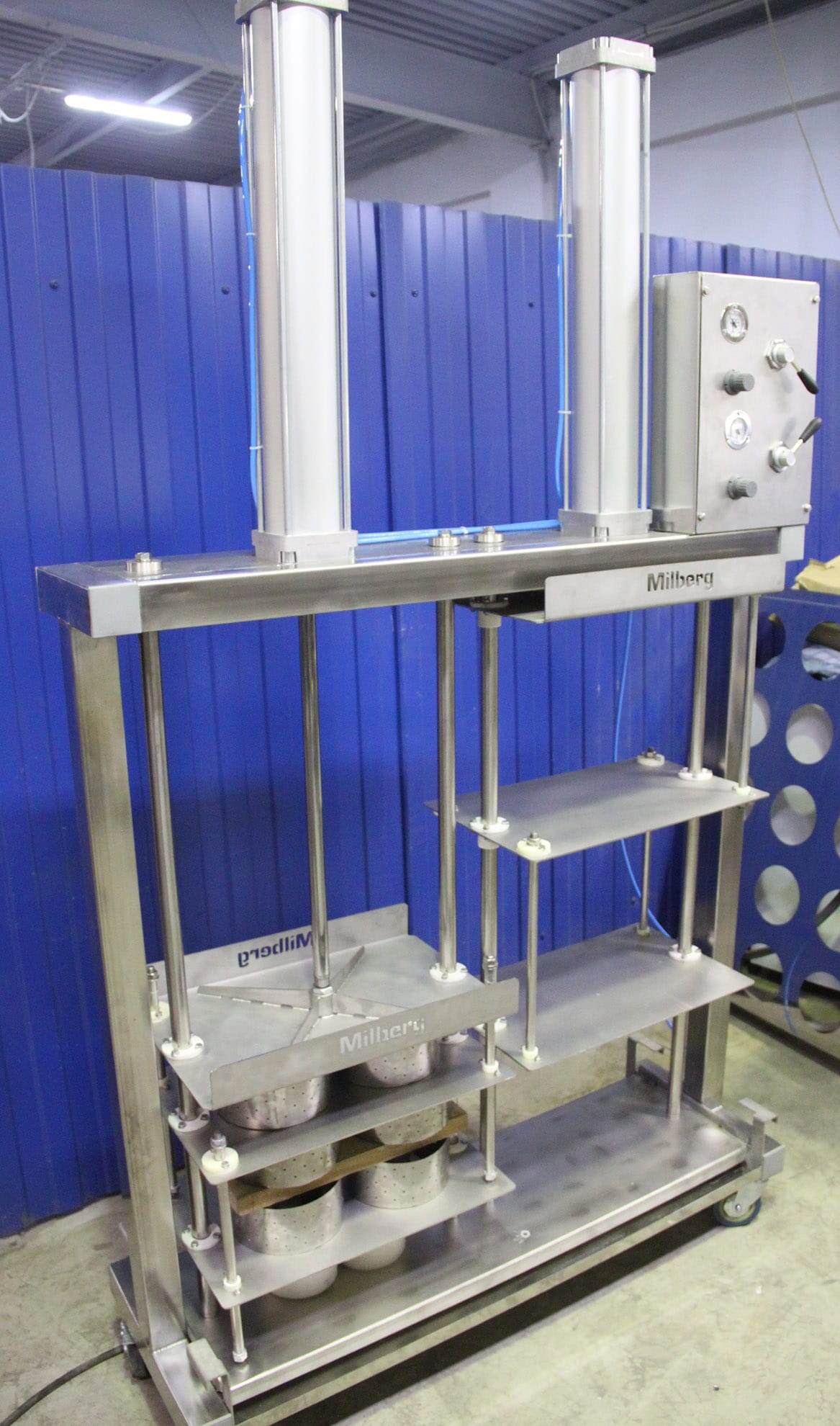 Cheese press (pneumatic / manual)Pressing of hard and semi-hard cheeses
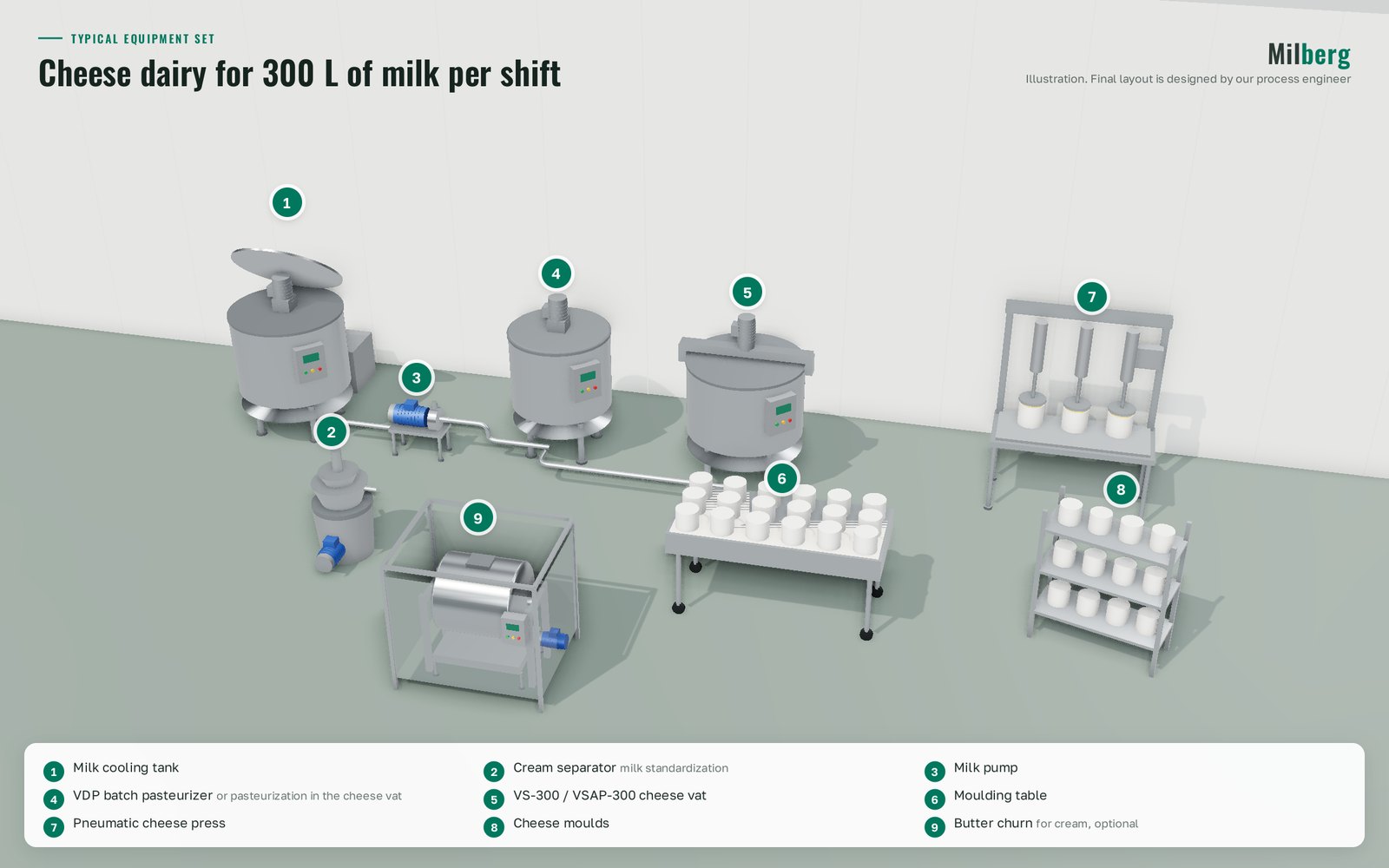 Cheese workshop for 300 L of milk: equipment set300 L cheese vat, press, moulds, pasteurization, milk cooling
Catalogue sections: Cheese making equipment, Equipment sets, modular dairies and mini plants