


Food dosing units: what they are for and how they work
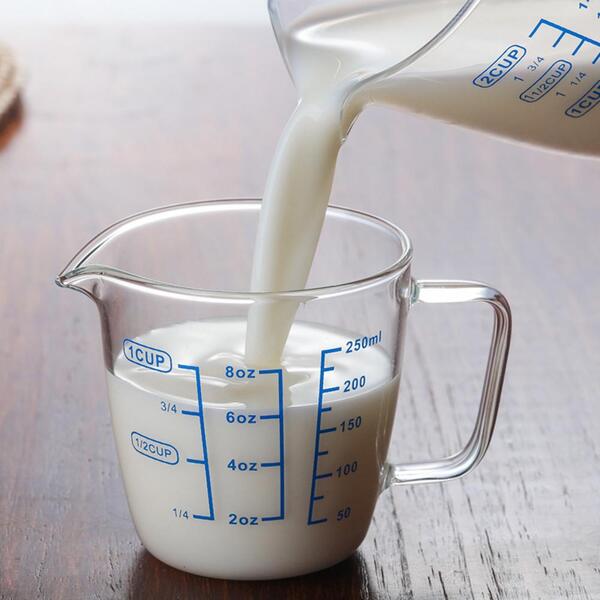
A doser is a device for measuring out a set quantity of a liquid, viscous or free-flowing substance. In the food industry, dosers are one of the most important elements of filling and packaging equipment and are used at a wide variety of plants.
Dosers differ in their dosing method — this is the main distinction between them.
For liquids and pastes, volumetric dosers are most often used. The required dose is calculated from the volume of liquid coming from the main tank, in proportion to the required weight or volume of the dose.
For pastes, dosers that measure by weight can also be used. Gravimetric dosers are more versatile than volumetric ones: they do not need to be readjusted for different types of product, and they are much more accurate. However, gravimetric dosers also have drawbacks. Because they use technically complex devices, they cost considerably more than volumetric dosers. They are also much slower than volumetric units (by a factor of about 4).
Dosers also differ in the way the product is moved. Auger and piston dosers are used for liquid products. Auger dosers have the simplest design and are easy to maintain, but they have a major drawback — significant measurement errors. Piston dosers have a dedicated piston that moves the product. The design of such a doser is fairly simple, but it is not suited to highly viscous products.
How dosers work
The operating principle of all dosers (including those for liquid products) is practically the same:
- First, the product is transferred from the main tank to the dosing unit.
- Then the required dose is determined by volume or weight.
- Finally, the measured portion is discharged into the package through a discharge valve.
Requirements for dosing equipment
Like any food processing equipment, all dosers must comply with certain regulations. The most important points to look out for are:
- Dosing accuracy. Dosing devices must ensure the specified dosing accuracy and stable doses during long-term operation.
- Simple design. The mechanisms of the dosing device should be simple (this reduces the risk of breakdowns during frequent or continuous operation) and easily accessible for all hygiene procedures.
- Use of approved materials. Food dosers must be made of reliable, high-strength, abrasion-resistant materials that are also approved for use in the food industry. Special stainless steel, which fully meets these requirements, is the most common choice.
The Milberg plant offers a wide range of equipment for dairy farms, including equipment for dosing, filling and packing dairy products, suitable for both small family farms and large plants. In line with food safety and hygiene standards, all equipment manufactured at our plant is made of high-quality stainless steel approved for use in the food industry.
If you need to buy milk processing equipment, submit a request on the website or contact our specialists by phone.
Milberg equipment mentioned in this article
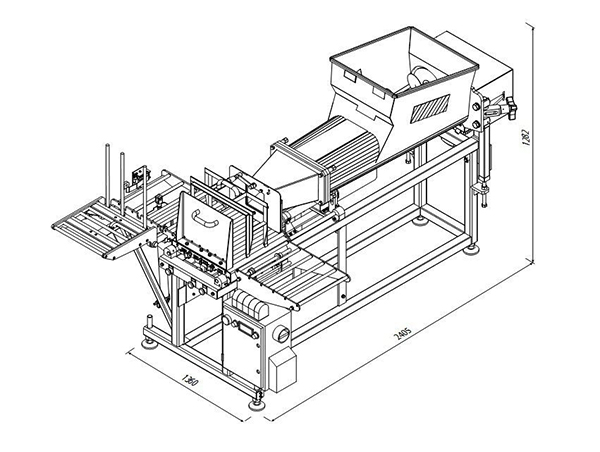 Butter and spread carton packing machinePacking butter, margarine and spreads into cartons as 20–25 kg blocks
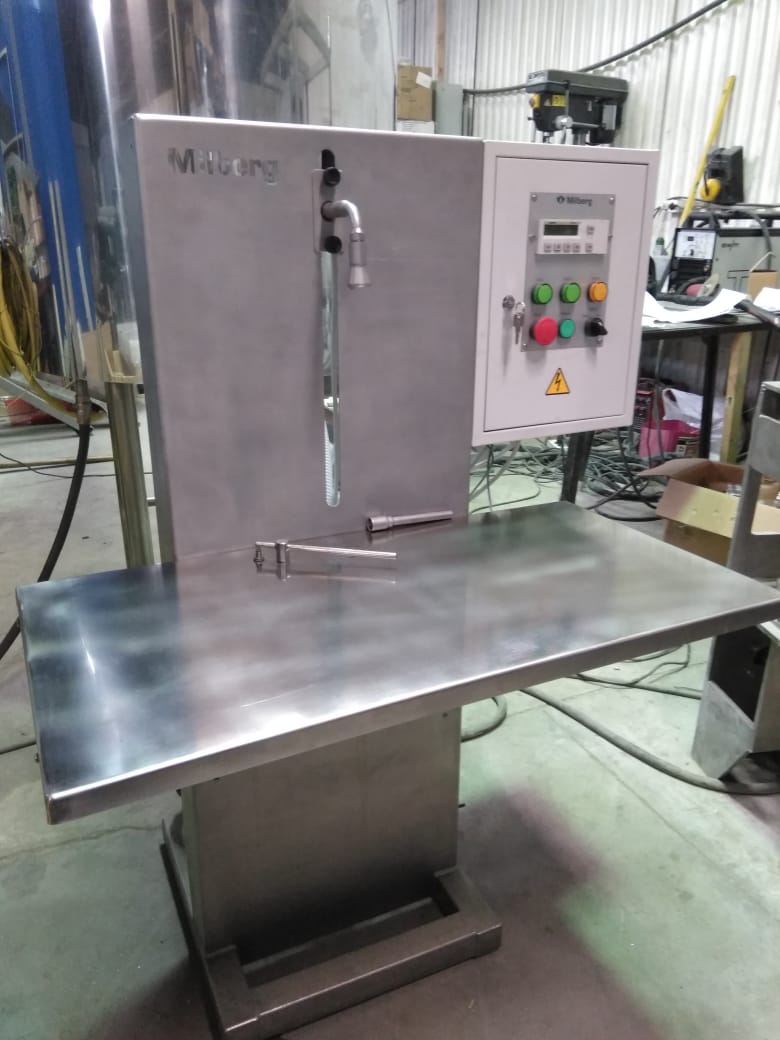 UD-2 dosing and filling unit for bottles and cupsFilling milk and cultured dairy products into bottles and cups
Catalogue sections: Packaging equipment, Butter making equipment