


Home vs industrial cheese vat: choosing the equipment
Cheese is part of the daily diet of most families around the world. The market offers a large number of varieties from different producers. Despite the huge choice of industrially produced cheeses, homemade cheeses are just as popular.
Making cheese can not only be a pleasure but also a source of income. To become a cheesemaker who earns good money, you do not have to build factories or aim for industrial scale straight away. A small workshop is enough to generate a high and stable income.
The main questions that entrepreneurs entering this market segment need to resolve are:
- finding a reliable raw milk supplier;
- selecting suitable premises;
- choosing the [equipment](/equipment/ required for production;
- building contacts in the market for the finished product.
Home or industrial cheese vat?
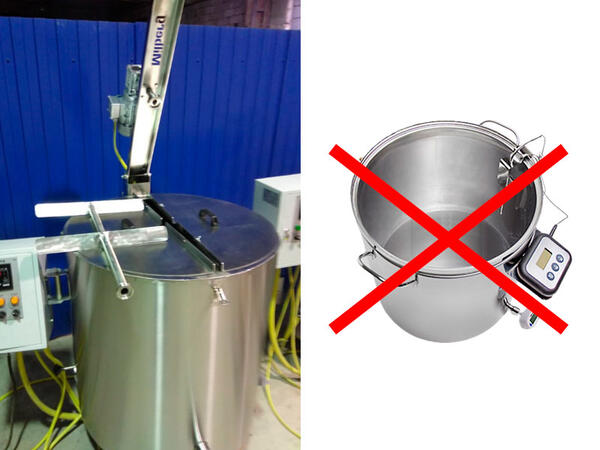
A home cheese vat is designed for domestic use, i.e. making cheese for yourself. Its price is minimal because it is not intended for continuous production and is made of thin stainless steel (cheaper alternatives to food-grade stainless steel). The main purpose of a home cheese vat is as a hobby, making cheese for your own use. It requires less heating power and has lower specifications in other respects (simple components, mostly Chinese-made). This is primarily due to the smaller production volumes rather than the quality of the finished product.
The main purpose of an industrial cheese vat is to make cheese for sale. These vats are durable and made of thick, certified food-grade stainless steel approved for food contact. They have a reliable automation system controlling the heating and the agitator. As a rule, they are double- or triple-walled vessels.
Broadly, a complete cheese-making set-up can be divided into 2 separate categories of equipment: 1 – main equipment, 2 – auxiliary line. The first category includes:
- vessels fitted with electric heating elements or another type of heater, made of stainless steel to prevent corrosion (with a capacity of at least 50 litres);
- a water jacket fitted to the vessel, first to heat it and then to cool it (to automate this process and eliminate the risk of errors, it can be fitted with a built-in temperature controller);
- a water supply;
- reinforced silicone hoses with valves (used to connect to the water jacket).
The second category of equipment includes:
- containers for storing semi-finished product (must be made of food-grade plastic);
- colanders for draining the curd grains;
- moulds for filling the cheese mass and a place to store them;
- a press;
- containers for storing whey;
- trays for cheese moulds;
- a place to store the finished product under specific conditions (which may vary depending on the type of cheese produced).
When choosing equipment, it is best to opt for manufacturers with a good reputation among professionals.
Buy an industrial cheese vat
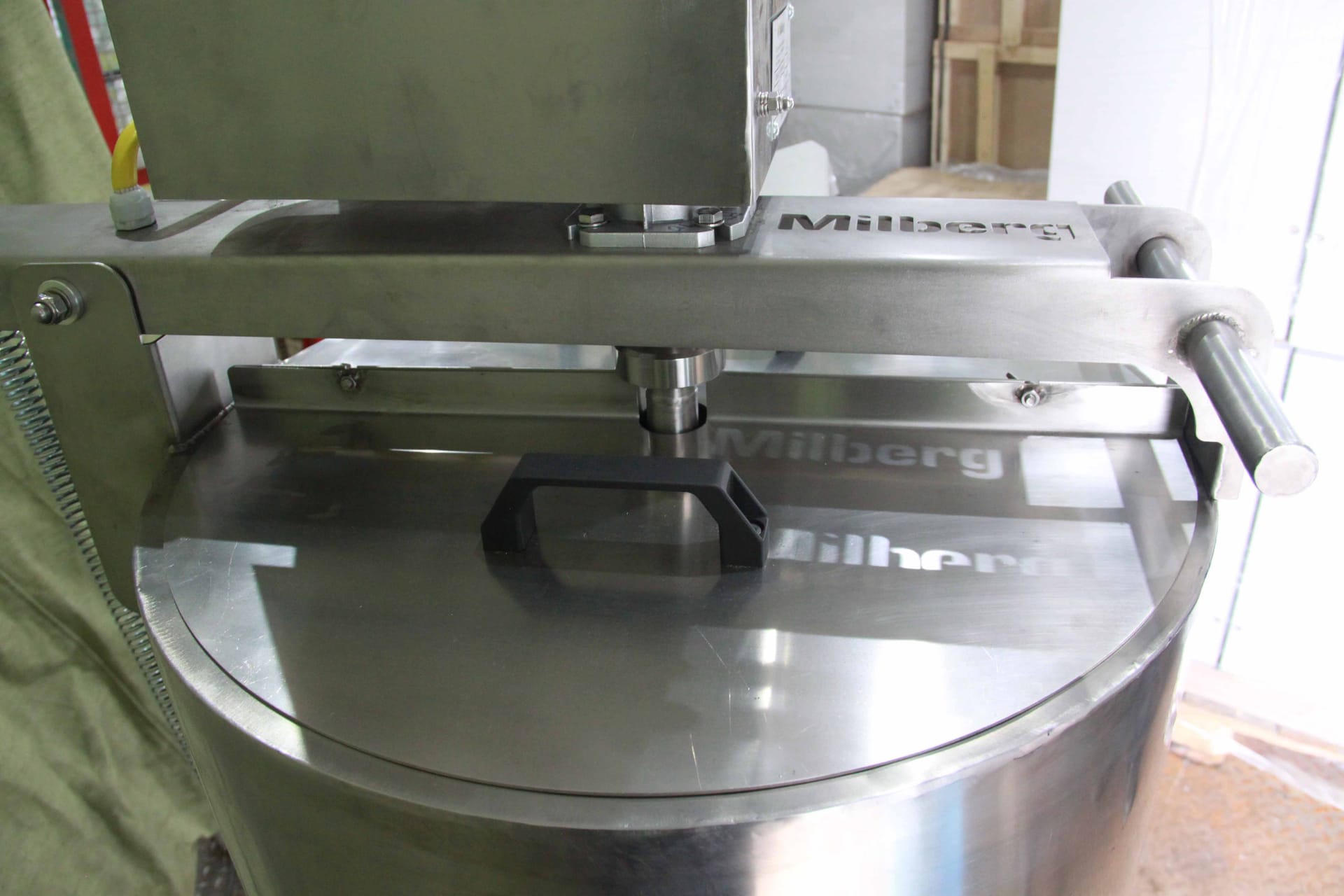
Milberg equipment mentioned in this article
Catalogue sections: Cheese making equipment, Milk processing equipment