


The history of syrniki
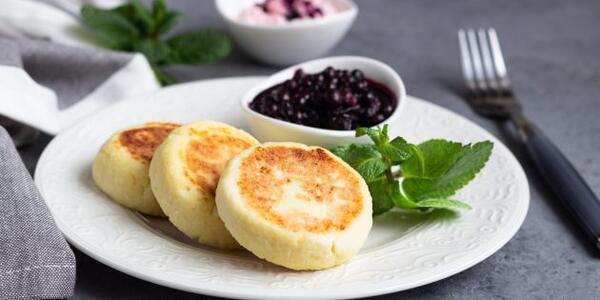
Syrniki — small fried pancakes made from tvorog (quark) — have been made for centuries. Looking into history, we can find out where syrniki came from.
The ancient Roman version
Once upon a time, a merchant from Arabia set off on a rather long journey with a wineskin full of milk. According to legend, his drink turned sour on the way. Alas, he had nothing but this soured milk, and he was terribly thirsty. So Kanan (that was the merchant's name) decided to drink the milk as it was. He was prepared for the worst, but he liked the taste of the whey very much, and the white crumbly lump even more. When Kanan returned home, he shared the happy news with his wife, and she repeated the experiment at home. The resulting curd and whey greatly impressed their relatives and neighbours, and this miracle soon made its way to Rome. The process of making the curd was extremely simple: milk was poured into huge ceramic amphorae, where it soured naturally. The cooks then drained off the liquid (whey), pressed the white mass (curd) and served it straight away on plates with thick honey and dried fruit. This method of making curd did not involve any heat treatment (heating). And nobody made syrniki in those days. For this reason, Rome can claim to have invented cheese, but not syrniki.
The Slavic version
One day, a housewife whose name history does not record discovered a curdled mass in soured milk. Originally this product was called "syr" (cheese), because in the early days it was made from raw ("syroye") milk. The Slavs went further than the Romans. The product had a short shelf life, so they decided to make it last longer. To do this, they began to simmer milk slowly in a Russian stove over a low fire (which produced very tasty baked milk). Clay pots of milk stood in the stove for several days, and when the curd had formed, the pots were taken out and the curd was squeezed. It was then put under a press. This method extended the shelf life of tvorog to several weeks. Apparently, one day the women had no time for lengthy procedures, so they decided to add the curd to bread. The result won approval, and the bold housewives went further still. And so, as the recipe was refined, home-made syrniki came into being.
Milberg equipment mentioned in this article

Catalogue section: Curd (tvorog) and cultured dairy equipment